
We are thrilled to announce our investment in Databricks and to partner with Ali Ghodsi and his entire team. Databricks sits at the center of the most critical architectural shift since the cloud: the transition from human-operated to agent-operated software. We believe they have built the only platform designed from first principles for this era.
At Premji Invest, our approach is rooted in developing a deep understanding of the product vision. When a technology stack shifts, we dig deep to understand where bottlenecks may develop and what capabilities can accrue value at scale. As enterprise agents move from concept to production, our thesis is clear: Databricks is evolving from a leading data and analytics platform into the foundational execution and governed context layer for the agentic enterprise. Critically, this is not a pivot away from the core. We view the lakehouse business as one of the largest beneficiaries of this shift across software, and it is reaccelerating rapidly as a result. On top of that base sit three strategic growth levers that together fulfill the vision of becoming the data fabric for the enterprise in the AI era: Lakebase for transactional workloads, Genie and the agent layer that governs and routes agentic work, and a new class of agentic applications built directly on the platform.
Enterprise AI has a context problem
Foundation models have become remarkably capable: they can write code, reason across multiple steps, and interact with external tools. However, intelligence alone cannot automate real enterprise work. Many AI agents fail in production due to poorly engineered context and missing access controls.
Historically, the enterprise data stack was built for human behavior: analytical query volumes scale with the number of data analysts, administrators pre-provision databases, and compute cycles are tied to rhythms of the human workday. Agents fundamentally break this paradigm. They issue exponentially more queries, spin up databases on demand, and burst compute 24/7.
Furthermore, agents lack the implicit context human employees possess. For example, they do not intuitively know which of the seven revenue definitions is correct or what the business means by "active customer." Letting agents reason over raw tables at runtime is slow, expensive, and unreliable. The true bottleneck is governed context: the accumulated semantic knowledge of the organization's entire data estate.
Agents need three things that the historical enterprise data stack does not provide:
- An operational foundation built for programmatic, bursty workloads
- Accurate answers grounded in governed context
- Economic control, i.e., forecastable AI budgets and the ability to route each task to the most cost-effective models (vs. sending all tokens to expensive frontier-models)
Unity AI Gateway and Genie Ontology
Databricks addresses this challenge through Unity AI Gateway, which helps companies control AI access, spend and observability across agents, tools, models, and MCPs. On top of it, Databricks has built the Genie Ontology, a live context layer and continuously constructed knowledge graph that extracts metric definitions, business terms, and asset relationships from the customer's own tables, queries, and documents.
This context is precomputed rather than retrieved at inference time. Genie Ontology does the extraction and ranking work continuously in the background, so at runtime, the agent reads a summary of what the organization knows instead of reasoning over raw data (expensive and slow). This approach has proven to yield significant cost and latency gains while simultaneously providing the fine-grained controls to securely make the enterprise data accessible to AI.
Databricks will monetize the entire agentic data stack across transactional and analytical workloads
As agents collapse the cost of creating software, the number of applications inside an enterprise is increasing exponentially. With agents, these applications are being instantiated on demand with unpredictable access patterns. Databricks' Lakebase is a modern take on OLTP that we believe is best positioned to be the default operational backend for this wave.
Lakebase is built on Postgres, the open-source database that has become the default foundation for modern applications and, increasingly, for AI agents. Postgres stands out for its customizability, extensive ecosystem of drivers, extensions, and migration tooling, along with the operational knowledge already sitting inside every engineering organization. Lakebase separates compute from storage, moving durability into object storage so the compute layer holds no durable state of its own. That is what lets Lakebase scale compute to zero when idle and come back on demand, which is exactly what agent workloads require. Agents can create, use, and abandon databases dynamically without anyone paying for provisioned capacity in between, and can safely test changes against instant, disposable copies of production data. Roughly 80% of databases on the Lakebase architecture are already created by agents rather than humans.
We see a growing number of workloads migrating to Lakebase because it is the only operational database that agents can provision programmatically inside a platform the enterprise has already governed. Beneath the operational data sits a larger body of information: documents, events, logs, traces, and embeddings. Because this operational context lands in an open format under the same catalog and storage as the rest of the company's data, it is immediately available for analytics and AI in the Lakehouse without having to build and manage brittle pipelines.
Growth durability: Databricks is an index bet on enterprise AI
We believe we are in the extreme early innings of enterprise AI adoption. Production deployment is constrained by data readiness, permissions, workflow redesign, reliability, and org change. Goldman predicts that enterprise agents alone (excluding consumer usage) could account for ~12x increase in token consumption vs. all tokens consumed today across enterprise and consumer.
Conventional forecasts underestimate Databricks by extrapolating solely from today’s human-driven workloads. We believe with high conviction that the market is getting this wrong, and that Databricks is positioned for faster, more durable growth.
Databricks does not need to predict which foundation model, agent framework, or end-user interface ultimately wins. As agentic activity scales, consumption cascades down the stack: agents require data ingestion and transformation (data engineering), data preparation and low-latency compute across heterogeneous data types (Lakehouse//RT, Photon, Spark, Delta, Iceberg), lifecycle governance (MLflow), orchestration (Agent Bricks), and post-execution analytics and reporting (SQL). Databricks monetizes the compounding compute cycles across the entire data estate.
Thus, every successful agent creates more demand for the core governance stack (Lakehouse, Data Engineering, SQL, ML) while accelerating adoption across all three growth levers: Lakebase in transactional workloads, the Genie and agent layer that routes and governs that work, and the agentic applications Databricks is now building directly on its own platform, beginning with customer data and security.
Partnering with a generational team
Ultimately, our conviction in Databricks rests on the team. Very few technology companies successfully crest more than one secular wave. Ali Ghodsi and the Databricks leadership have compounded execution for over a decade while repeatedly expanding the company's footprint into new categories: from big data with Spark, to the lakehouse architecture and data warehousing, to GenAI, and now to OLTP and the agent layer with model serving and routing. Databricks has won in each on the strength of a single coherent platform rather than a portfolio of disconnected products. What stands out most is that these waves are being caught nearly simultaneously rather than in sequence, which is what separates Databricks as an enduring franchise. We believe Databricks will be the data and governance foundation on which the agentic enterprise is built, and we are honored to partner with the Databricks team on that journey.
Recommended

Backing Foundational Shifts with Patient Capital - NSE's Monumental Journey
Backing Foundational Shifts with Patient Capital - NSE's Monumental Journey
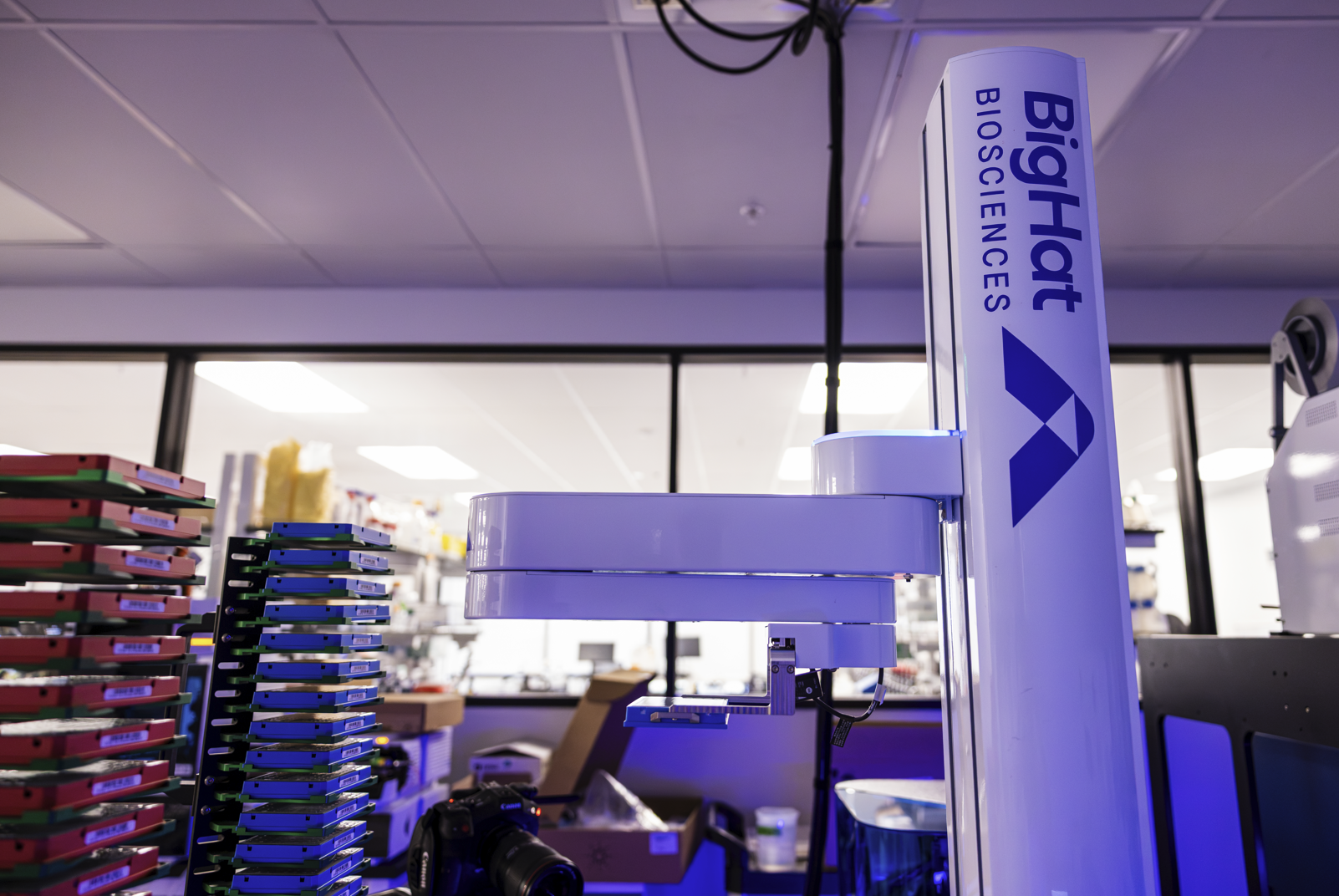
Beyond binding: why we co-led BigHat Biosciences’ Series C
Beyond binding: why we co-led BigHat Biosciences’ Series C
.jpg)
Agents need more than intelligence. Why we invested in Databricks
Agents need more than intelligence. Why we invested in Databricks

The Downstream Effects of SpaceX, OpenAI, and Anthropic Soaking Up $3T in the Public Market, Who Is Netscape and Who Is Google in the AI Era, and the Impact of Private Credit Redemption Requests on PE and VC (Sandesh Patnam)