A humanoid can do a backflip on stage. It can run, climb stairs and carry a box across a warehouse. What it still can't do well is pick up a cable, route it through a channel and press the connector in until it clicks.
Robotics turned out to be backwards from what most people expect. The moves that look hard to us, like a backflip, were the easier ones to automate. The work that looks easy, like the everyday handling a child picks up without being taught, is the hard part. Researchers call this Moravec's paradox.
Most physical work is that second kind. That is the work Genesis is going after. We're thrilled to be co-leading the Series A.
Why everyday work is hard for a robot
Three things make it hard.
First, no two objects behave the same. Some are rigid, some bend, some slip. The same cable sits differently every time you pick it up.
Second, a lot of the skill is in touch. How firmly to grip. How hard to press. When to stop.
Third, the world is built for people. Tools, parts and workstations all assume a human body and human hands. And in a factory, the robot has to get it right almost every time, shift after shift.
So a useful robot needs four things at once: a capable body, a lot of the right data, a model that can act on its own, and a way to test it all. Each one depends on the others. No single piece solves the problem.
Genesis's answer: build the whole stack, together
Genesis builds the whole robot and everything behind it: the hardware, the data, the model and the simulation. All of it is built in house and designed together, because the hardest problems sit where these pieces meet.
Hardware: a full robot, built to last
Genesis builds the full robot, not a component for someone else's machine. The most demanding part is the hand. It is the same size as a human hand, with 20 moving joints, soft skin and touch sensing. The reason is simple. The world is built for people, so a robot that works the way a person does can step into an existing workstation without the customer rebuilding it.
Building that hardware is hard. Building hardware that lasts is harder. A robot has to run for millions of cycles without breaking. If it fails often, repair and warranty costs pile up and the gross margin goes with them. Reliable hardware for dexterous work is not something you can buy off the shelf today, so Genesis builds its own.
The hardware also cannot be built apart from the model. The hardware decides what data you can collect, and the data decides how good the model can get. So a hardware choice is also a model choice, and the two have to be made together.
Data: a lot of it, and good
Robot data has two dimensions that matter: fidelity and scale. Fidelity is how much of the real task the data captures, including how the hand moves and what it feels. Scale is how much of it you can get. Most sources give you one or the other. The goal is both.
Genesis's approach is to start from people. Its model learns mostly from recordings of people doing real tasks, adds a small amount of robot data, and keeps improving from real-world use and simulation. To capture that human data, Genesis built a light, sensor-loaded glove that matches its robot hand, so people can wear it while they work. The company says it has collected over 200,000 hours of data with partners so far.
Data also cannot be collected apart from the model. The team that trains the model is the one that knows what data it needs next and how that data should be collected. When the model fails at a task, they can trace the failure back to the data and fix it. Genesis works with data partners, but it decides what they collect. Because it trains the model itself, it knows which data helps and which does not.
Model: autonomy is the business
The model is what turns capable hardware into a robot that does the job on its own. That matters for more than the demo. If the robot cannot finish a task alone, a person has to step in remotely. The product becomes a tele-assisted service, and the margins go with it.
Genesis builds its model in house, next to the hardware and data teams, because that is how you get to high autonomy. Each team shapes what the others build.
Simulation: the hidden bottleneck
The team points to a problem most people outside robotics never see: testing. With a language model, you run an experiment overnight and wake up to a dashboard. With a robot, a person resets objects on a table all day, hundreds of times, to get one score for one task in one room.
Simulation only helps if what works in the simulator also works in the real world. That gap between sim and real is the hard part. Genesis built its simulator from the ground up to narrow it. The company started as an open-source simulation project, and its simulation team sits right next to the model and hardware teams. That lets Genesis test its models in simulation and trust what it sees.
Why it has to be one company
Each layer is hard on its own. The real value sits in the interfaces between them: the hardware that shapes the data, the data that feeds the model, the model that is tested in simulation, and the simulation that matches the hardware. Genesis owns all of those links.
Industrial work first, and deployment from day one
Genesis is starting with industrial work. Industrial customers buy on return on investment. A robot that drops into an existing workstation is easy for them to say yes to. And once robots are part of how a customer runs its operations, they are hard to replace.
The team is also focused on deployment from the start. Their view is that you cannot solve robotics in the lab. The real world is where you learn what actually breaks.
Every deployment sends real-world data back into the system. That data improves the model. A better model makes the next deployment faster. The hardware gets cheaper as volumes grow. That loop is what sets this business apart, and the company that deploys the most robots learns the fastest.
Team, tech, TAM and syndicate
For companies early on the maturity curve, we look at four things: team, tech, TAM and syndicate. We covered the tech above.
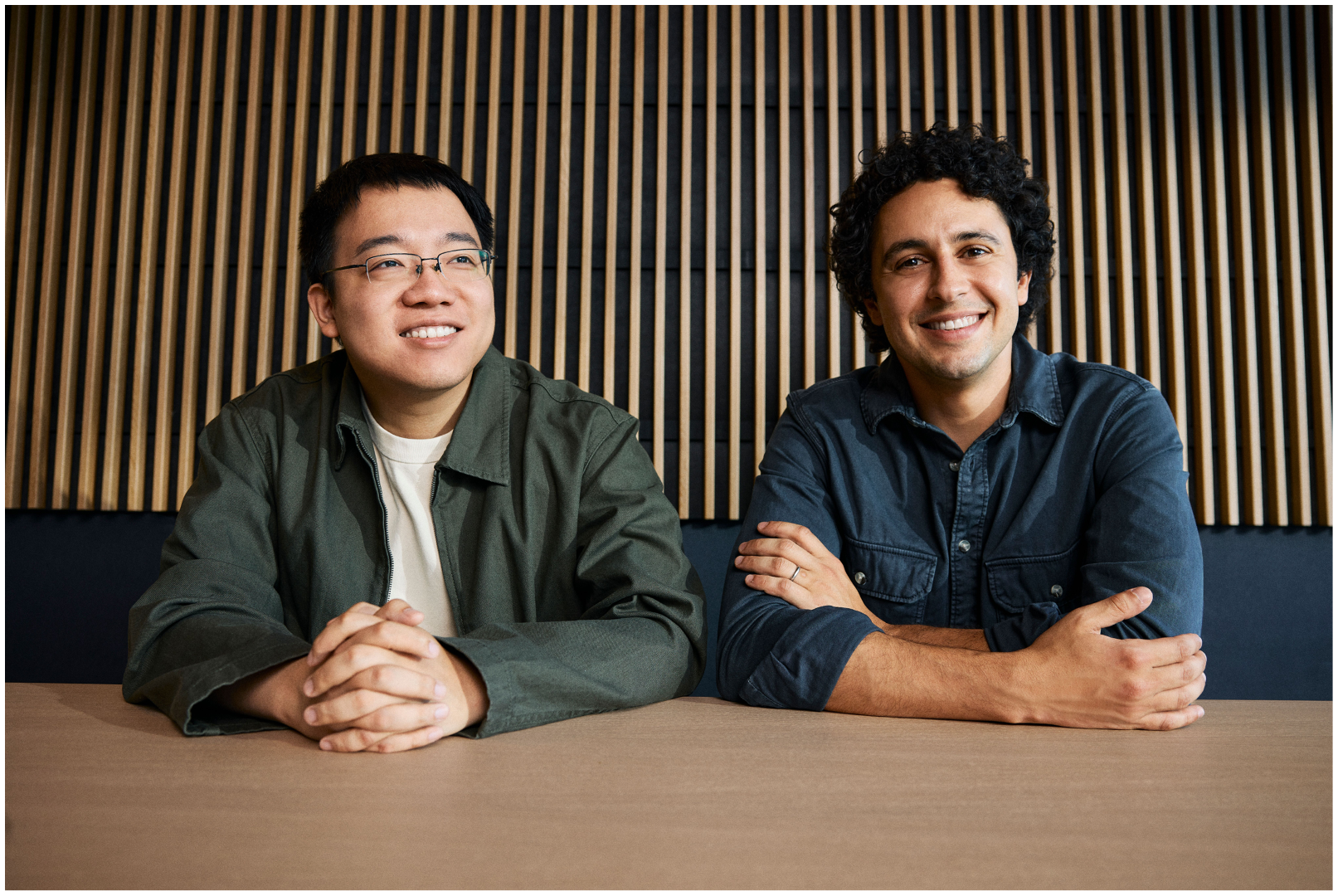
Team. Genesis has one of the deepest teams in robotics. Xian Zhou, the CEO, led the Genesis simulation project during his PhD at Carnegie Mellon, before there was ever a company. Theo Gervet, the president, led multimodal modeling at Mistral and was a founding member of Skild AI.
The rest of the team is just as strong. It has deep skills across every layer of the stack: hardware, simulation, physics, robot data and model training. Its members come from Tesla Optimus, Google DeepMind, Nvidia and Apple, among others. A team this broad is hard to assemble at any stage.
TAM. Industrial labor alone is a vast market, and most of the hands-on work in it has never been automated.
Syndicate. Genesis has a strong group of investors around it, including Khosla Ventures, Eclipse and Eric Schmidt. It is a good mix of hardware and AI expertise, which is the mix a full-stack robotics company needs.
Closing
Robots have learned to walk, run and flip. The next step is to do real work, in the places people work today. That takes hardware built to last, data that captures how the work is really done, a model that can do the job on its own, and a way to test it all at scale. Genesis is building every one of those pieces, together.
We are excited to partner with the Genesis team on what comes next. Onwards.